

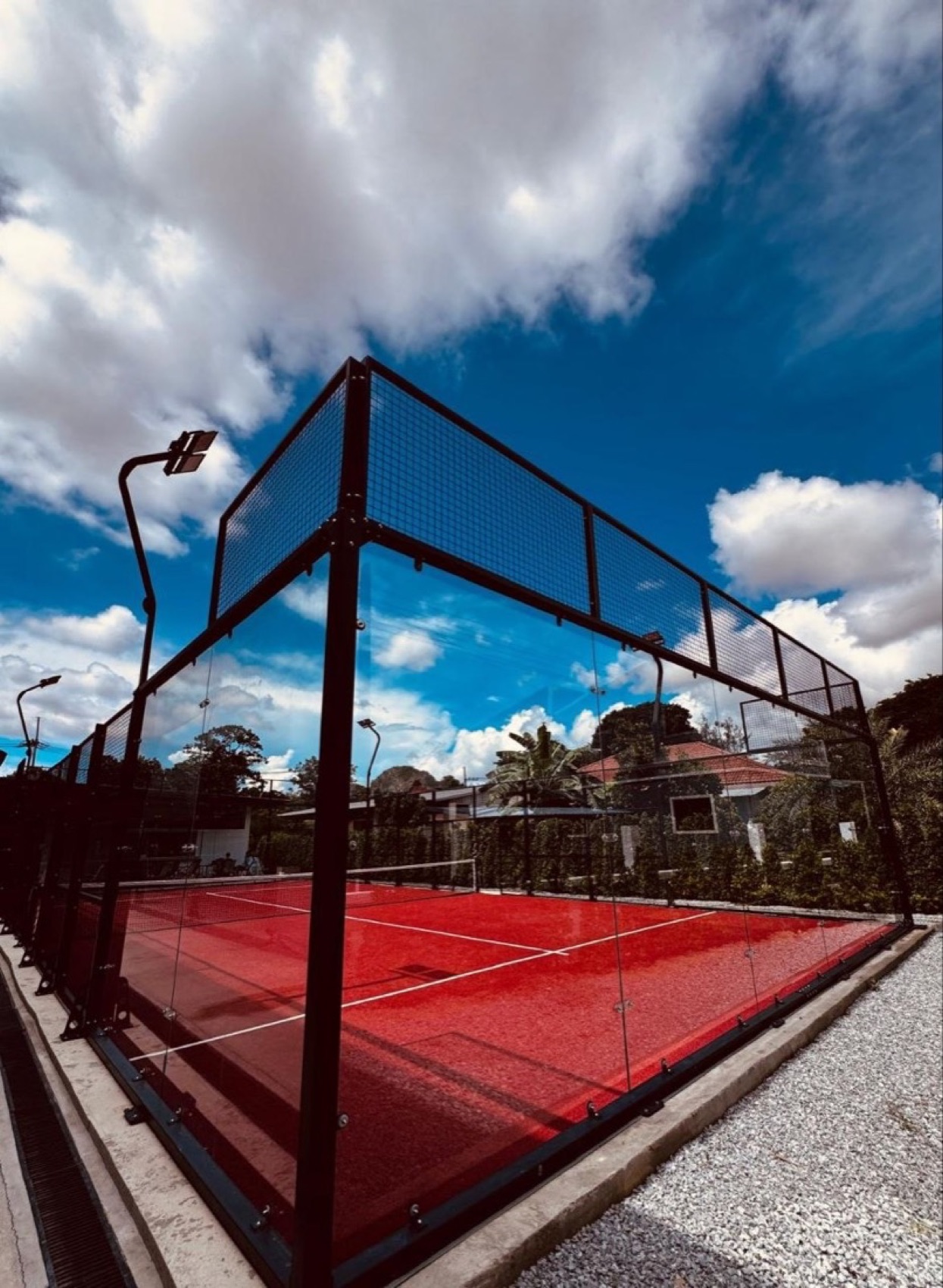
Every padel pair is two jobs: the builder and the finisher. Which side you play shapes everything — your forehand, your backhand, your movement, your partner. Here's how to find your half, why it matters from your first serve, and a quick test to settle it.
Not sure which side is yours? Take the 30-second test.
Seen from above. The net cuts the court in half; the two halves on your side are the LEFT side (the finisher) and the RIGHT side (the builder).
The right side — the builder
The consistent one. Your forehand sits in the middle, so you handle the first serve, the returns down the centre and the long, patient rallies. You keep the ball alive, move your pair into position and wait for the opening — then let your partner pull the trigger. Steady beats spectacular here.
The left side — the finisher
The closer. You cover the diagonal and put points away. The left gets more space and time on the overhead, so the bigger, more aggressive smash lives here — and the finisher should take more of the overheads down the middle to kill the rally. More glory, more pressure, and more misses if you force it.
Forehand, backhand and where the middle goes
For two right-handers, the right-side player's forehand points to the centre and the left-side player's backhand points to the centre. The middle of the court — the gap between you — is where most points are won and lost, so you want strength there. That's the whole logic of side selection: cover the middle, protect the corners.
If you're left-handed, play the RIGHT side.
A lefty on the right puts their forehand in the middle. Pair them with a right-handed partner on the left and now both forehands cover the centre — the strongest possible spine for a team. It's why so many of the best pairs in the world are a righty-lefty combination. Two righties simply swap so the steadier player takes the right.
Who belongs on the left?
The left-side player is usually the one who ends points, so the profile is specific:
The taller player
Height means reach over the net and a steeper, heavier smash. Put it on the side that takes most of the overheads.
The faster player
The finisher covers more ground — chasing lobs, stepping across to cut off the middle. Speed pays off on the left.
The aggressive one
More space and time on the overhead means the bigger smash, vibora and bandeja belong here. Attack down the middle and finish.
The stronger backhand
The left-side player's backhand points straight down the middle — where most points are decided. A solid backhand belongs on the left.
Court vision
From the left you read the whole court diagonally and watch your partner's build develop in front of you. The right-side player has the cleaner view of the incoming serve and the centre — they're the eyes that call "yours" and "mine."
The first serve
The first serve of every game is hit from the right court, so the right-side player serves first and sets the tone. A reliable, well-placed first serve from the builder gets the team on the front foot before the finisher even touches the ball.
The mental side
The left carries the pressure of closing — miss the smash and the point's gone. It suits the fiery, confident player who wants the last ball. The right suits the calm head who can reset, absorb pressure and keep the pair steady.
Find your side
Answer a few questions and we'll point you to your half. It's a guide, not gospel — but it's a good place to start.
1 · Are you right- or left-handed?
Still not sure? We'll tell you in one session.
Most players feel it within twenty minutes on each side. Our coaches read it fast and put you where you'll win more — then build the shots that side needs.